Building with craft, thinking deeply, living by faith.
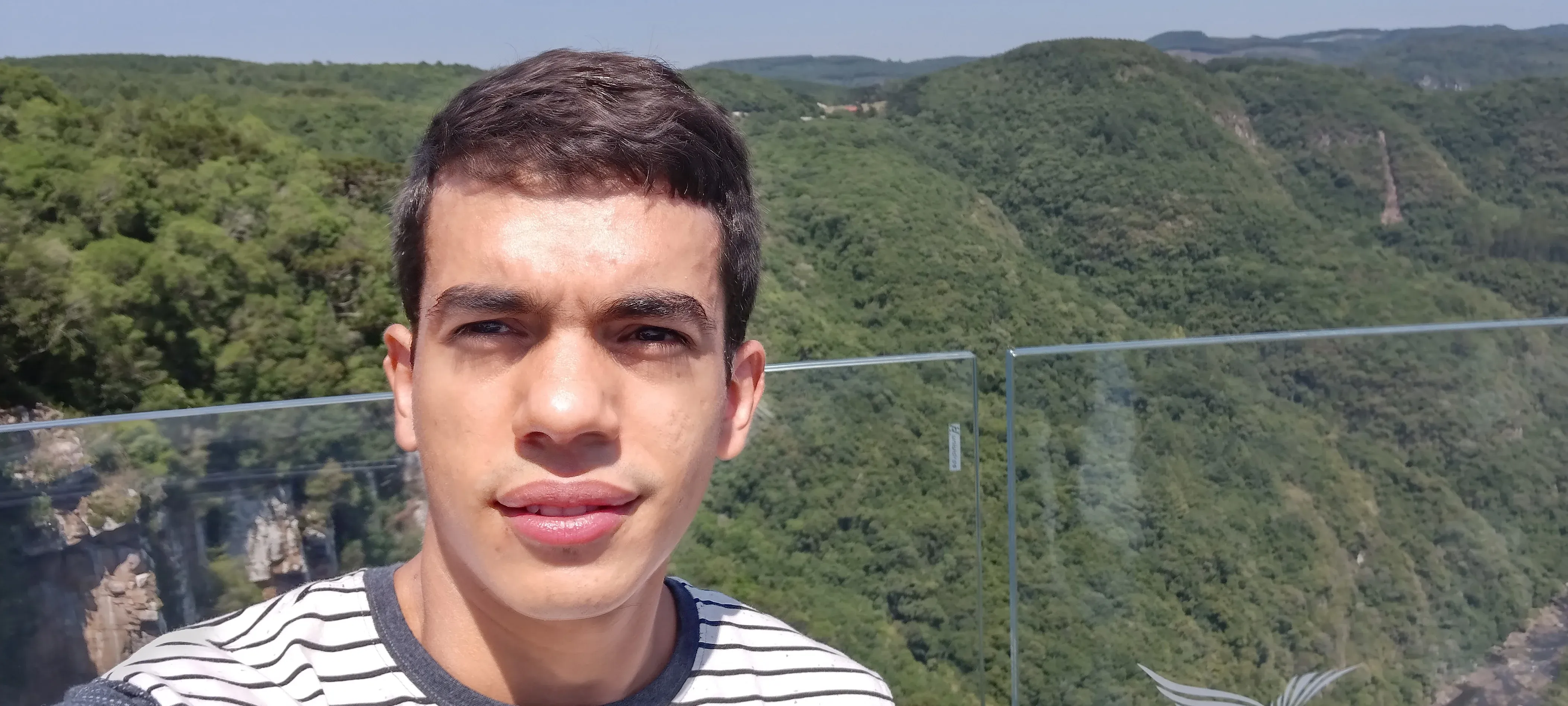
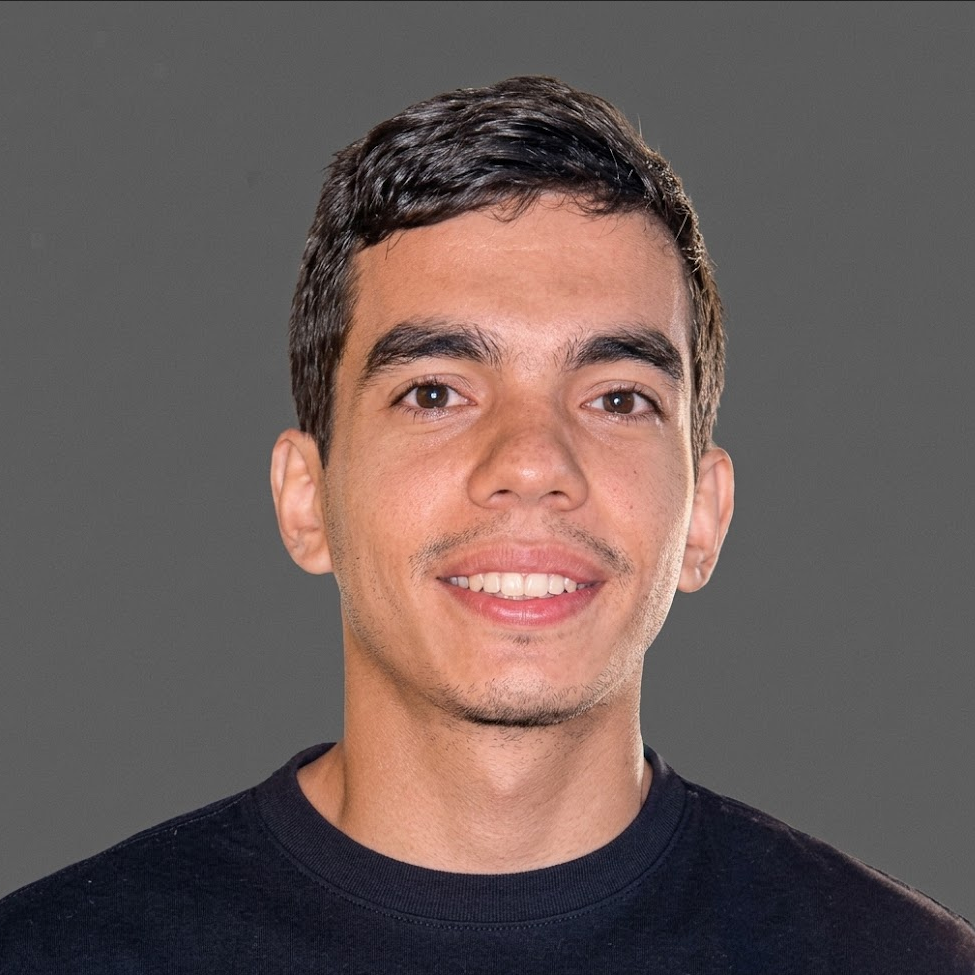
My name is Paulo Henrique[1], and I'm a software engineer from Fortaleza[2], Brazil, working at the intersection of engineering and faith. I like to think, explore, and ultimately write about my insights on software development, computer science, theology, philosophy, and other aspects of life I believe are worth talking about.
How I got here
Although I initially intended to follow a career in electrical engineering, "destiny"[3] led me to study computer science. In the early years, I wasn't sure this was the career I wanted —[4] I really struggled with programming logic. But after solving hundreds of exercises on a competitive programming platform, uncertainty began to fade and soon gave way to a passion for programming. The result? I got a scholarship, internship opportunities, and the chance to compete in programming contests.
Between 2014 and 2016 I competed in the Maratona de Programação Brasileira (opens in a new tab), winning the regional championship in 2016[5] and reaching the national finals that same year. Ultimately, all these experiences solidified my desire to pursue a professional career in software engineering. In fact, I owe much of my software knowledge — and consequently, my decision to follow that career — to my dedication to studying and practicing code challenges.
In late 2019, I earned my B.Sc. in Computer Science from Universidade Estadual do Ceará. Before that, by 2017, I had taken my first steps as a professional developer when I joined a company as an intern. So, Today I see that what started in competition environments eventually became a career built around solving real problems — writing production code, working across the full product stack, and paying close attention to the craft of quality software that users care about.
What I build
Today, I work as a software product engineer[6], full-stack[7] by default, with particular expertise in the frontend ecosystem: design systems, UI libraries & frameworks, component architecture, and the interfaces people use every day. There's something deeply satisfying about crafting a beautiful, polished, thoughtful user interface[8]. I think Paul Irish captures my natural inclination toward crafting them:
Crafting a UI holds a lot of responsibility. For more niche topics, the UI may influence, or become (!), the mental model that people retain for these concepts and systems. At the same time, a UI can delight the user in a way that backend never can... (one of my favorite examples (opens in a new tab)).
Despite my frontend expertise, I also build and run reliably the backend and infrastructure behind the interfaces people use. So I can take a feature from concept to production and, more importantly, maintain it with quality[9] over the years — which I believe is the true test of seniority.
In short, I build software (especially web applications), APIs, libraries, and other tools, while leveraging the capabilities that AI now offers us to boost their development[10].
Faith: how I see the world
I'm a (Protestant)[11] Christian, and that's not a detail I tuck away from the rest of my life. My faith in Jesus shapes how I think about everything[12]. As Turek and Geisler observed (quoting Mortimer Adler), our conclusion about God bears on every other area of life — it is the key to finding ultimate meaning and the most important question any human being has to address[13].
So, to go deeper into this matter, I have a postgraduate specialization in Sacred Scripture from Faculdade Cidade Teológica Pentecostal. And I expect to pursue further postgraduate studies and, perhaps, even a master’s degree in theology or philosophy, because I take the life of the rational mind alongside the life of faith as two approaches to observing and interacting with reality, and they do not contradict each other; on the contrary, they complement one another.
However, my interest in theological and philosophical knowledge does not mean I intend to become an intellectual or a researcher in the academic sense (maybe in the distant future?). Actually, it is merely an inclination of the will that makes me desire to know reality better. I believe that reflecting on life through the lens of the Bible helps me understand myself, other people's lives and my relationship with them, the world we all live in, and, mainly, how it all fits within God’s plan for life.
Away from code
When I'm not coding, you'll find me writing something (mainly on this website), spending time with my family and friends, serving in my church community, working out at the gym, reading a book, playing chess, or playing guitar/keyboard with my gig partners somewhere.
Get in touch
The most reliable way to reach me is email. I read everything and reply to most things within a few days. I’m on GitHub (opens in a new tab), which is the right place for a bug report or a pull request on anything I maintain. I’m also on X (opens in a new tab) and LinkedIn (opens in a new tab). If you’d like to follow along for more informal and non-technical moments, feel free to find me on Instagram (opens in a new tab).
Notes
- People call me "Paulo", "Henrique", "Paulinho", "Rique" and, most frequently, "PH". ↩
- On the coast of Ceará, in Brazil's northeast (opens in a new tab) — timezone GMT−3. ↩
- I originally wanted to study electrical engineering, so I took the entrance exam for the Electrical Engineering program at the Universidade Federal do Ceará (UFC) three times, but I didn’t get in. Interestingly, on my final attempt to get into UFC, I also decided to apply for the Computer Science program at the Universidade Estadual do Ceará (UECE) — even though I had no idea what that program actually involved (I assumed it had something to do with computers in general; I never imagined it was about software programming). So, I chose it simply because it fell under the "exact sciences" category, which is the field I’m naturally drawn to. To my surprise, I ended up qualifying on the UECE's waitlist and managed to get a spot in the Computer Science program. ↩
- I’m not supposed to say that, but the em dashes here don’t mean this text was written by AI. With the advent of LLMs (Large Language Models), much of AI-written text contains em dashes (opens in a new tab), which depart from the standard pattern of informal/non-academic human-written text. However, em dashes existed long before AI, and I like to use them in order to make my writing clearer. If you want to know more about how I use AI, check out the AI page. ↩
- It was a great experience! You can check out one of the highlights from this event here (opens in a new tab). ↩
- See Laurie Voss, "We are all Product Engineers now" (opens in a new tab). He makes the argument better than I can: as the cost of writing code collapses with the advent of AI agents, what remains is finding out what people actually want, defining it precisely, and making it pleasant to use. ↩
- By "full stack," I mean end-to-end ownership for a software product: from the database to the post-deploy pipeline — Postgres, Spring Boot, UI/UX, CI/CD, Observability, and everything else required for a standard application or service to work reliably. Naturally, given that my primary area of expertise is frontend development, these applications tend to feature a higher level of quality in that specific stack domain, without, however, compromising the high standard of quality across the other domains of the stack (though I’m well aware that "full-stack" developers will always be haunted by the meme (opens in a new tab) that comes with that title (opens in a new tab)). ↩
- Maybe this website can be a compelling testimonial of how much I care about great UI design and quality software. ↩
- Of all the definitions of "quality software," Alasdair Monk's definition (opens in a new tab) is the best I've seen so far. ↩
- I reflect on how AI is changing my relationship with software engineering in "Building software in the era of AI". ↩
- I emphasize that I am a Protestant Christian in order to deliberately distinguish myself from Roman Catholics, Mormons, Jehovah’s Witnesses, and other branches of groups that call themselves Christian. While I maintain respect and consideration not only for these various Christian groups but also for non-Christian groups — whether religious or otherwise —, I believe that Protestant Christianity offers the most accurate worldview regarding reality. ↩
- If you are interested in a longer answer about my beliefs, I set out further how they shape my identity in "What I believe and why I believe in what I believe". ↩
- See Norman L. Geisler and Frank Turek, Não Tenho Fé Suficiente para Ser Ateu (opens in a new tab). ↩